
Buying guides
Mechanical or hydraulic disc brakes on an e-bike?
Mechanical disc brakes transmit lever movement through a cable. Hydraulic disc brakes use fluid pressure in a hose. Both operate pads against a disc rotor; the main ownership difference is how the force reaches the caliper and how that system is maintained.
TXED uses mechanical discs on Trail and hydraulic discs on Maverick. That gives buyers a real configuration choice, alongside the bikes' different tyres, weight and layout.
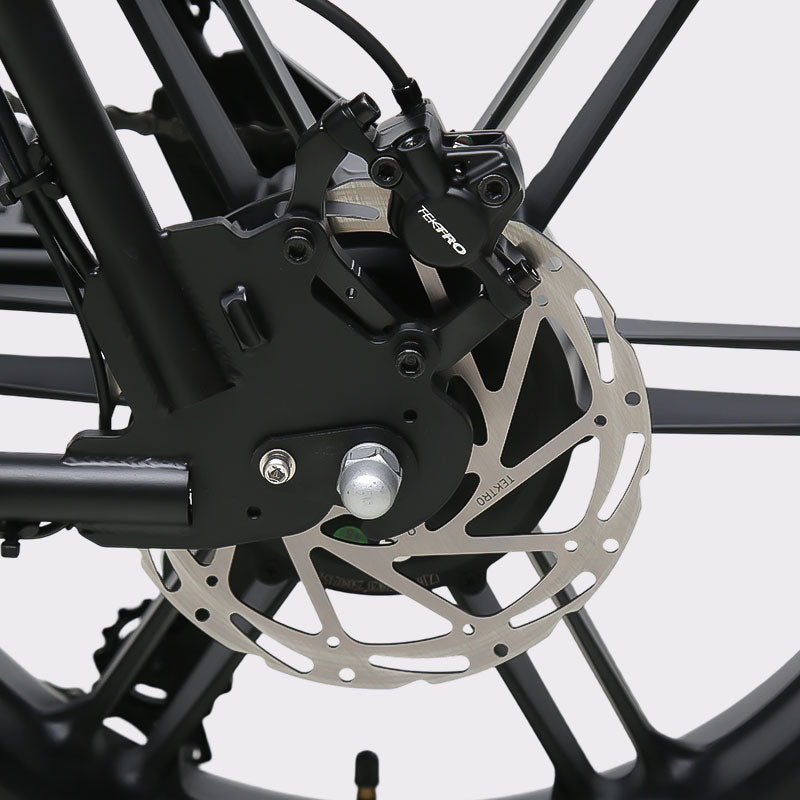
Compare how the systems are maintained
| Question | Mechanical disc | Hydraulic disc |
|---|---|---|
| What connects lever and caliper? | A brake cable running through housing. | A hose carrying hydraulic fluid. |
| What does servicing involve? | The condition and adjustment of cables, housing, pads and caliper. | The condition of the hose, seals, fluid system, pads and caliper; bleeding when the specified service requires it. |
| What information matters? | Exact brake model, adjustment instructions and compatible pads. | Exact brake model, compatible pads and the specified fluid and service procedure. |
| What remains important for both? | Correct installation, suitable components, clean braking surfaces, pad condition and regular inspection. | |
Choose around the complete bike
Start with the routes, loads and conditions the bicycle is intended to handle. Then consider the brake system as part of that configuration. Rotor size, pads, tyres, installation and condition also influence how the bicycle brakes. A brake-type label alone cannot establish a stopping distance or a result on your own route.
If you are comparing two models, ask how routine service will be handled where you live. A rider familiar with cable maintenance may value knowing that arrangement. Someone choosing hydraulic brakes should understand the particular system's service needs and access to suitable parts and professional help.
Keep replacement parts specific
Use the exact brake model to identify replacement pads and other service items. Similar-looking pads or a bottle of brake fluid intended for another system are not enough to establish suitability. Keep lubricant and general cleaning products away from the braking surfaces, and follow the brake manufacturer's instructions for maintenance.
Cycling UK's service guidance highlights pad wear and a normal response from both brakes as regular inspection points. A changed lever feel, reduced braking or a leak needs attention before the next ordinary journey.
See the two TXED configurations
Trail combines mechanical discs with a 24kg, non-folding bicycle and 27.5 × 2.3-inch tyres. Maverick combines hydraulic discs with 20 × 4-inch tyres and an approximately 40.4kg, non-folding bicycle. Compare those whole-bike differences alongside the service arrangement, using the Maverick and Trail guide for the remaining specifications.