
Care & ownership
E-bike chain slipping: describe the problem before adjusting
“The chain is slipping” can describe several different faults. It may fall off a chainring, jump between rear gears, or lose engagement while you push on the pedals. First identify which event you are seeing. That description helps separate a shifting or wear problem from a chain that simply needs routine cleaning.
If the drivetrain is slipping unpredictably, end the ride in a safe place. Repeatedly applying heavy pedal force to reproduce it on a hill makes the problem harder to manage.
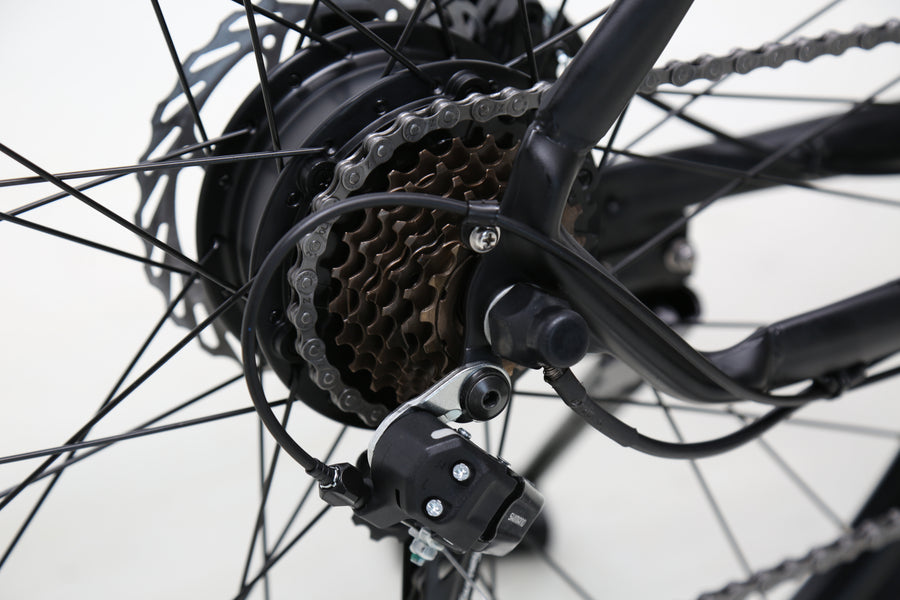
Describe what actually happens
| What you observe | Useful detail for the repair |
|---|---|
| The chain comes off | Where it leaves the gears, which gear was selected and whether you were shifting. |
| The chain changes gear without a command | Which rear gears are involved and whether the behaviour repeats at the same point. |
| The pedals move suddenly under effort | Whether the chain visibly jumps and whether it happens in one gear or several. |
| The chain catches or runs unevenly | Any visible damaged link, recent impact or change after maintenance. |
These observations narrow the enquiry; they do not identify a replacement part on their own. A short description made immediately after the event is often more useful than calling every symptom “bad gears”.
Separate routine care from a repair
With the bike switched off and stationary, inspect the visible chain and rear mechanism for obvious damage, heavy dirt or a loose component. Keep fingers away from moving parts. If you find damage or a loose mechanism, have the bike assessed before further riding.
A dirty chain can be cleaned and lubricated using the appropriate procedure. Persistent skipping afterwards calls for another explanation. Chain wear and transmission adjustment are among the areas a mechanic can assess; replacing or adjusting parts works best after that assessment.
Cycling UK's maintenance guidance recommends responding to imprecise shifting and measuring chain wear. Appearance alone is a weak basis for deciding that a chain is still within its service limit.
Give the mechanic useful context
Record the bike model, the gear involved, when the problem began and any recent wheel removal, impact, chain replacement or adjustment. Explain whether it occurs during a shift or when pedalling steadily. Include clear stationary photographs of the affected area if requested.
A new noise after maintenance can be particularly useful context. Preserve the information rather than making several unrelated adjustments before the fault is assessed. Limit screws, cable adjustment and replacement-chain compatibility each have a specific purpose and procedure.
Return to riding after the cause is addressed
Use the correct component instructions and service specifications for the fitted drivetrain. After the repair, confirm normal shifting and braking in a clear, low-risk area before resuming an ordinary journey. For help identifying the parts on your bicycle, contact TXED Support with the symptom record.