
Buying guides
Fat-Tyre vs Standard E-Bikes: Choosing Width for Your Ride
A fat-tyre e-bike is worth considering when a wider tyre format is part of the riding and ownership setup you want. Compare it with a conventional tyre layout using your regular surfaces, storage space and complete-bike weight. Width is one useful choice; the frame, riding position and equipment complete the decision.
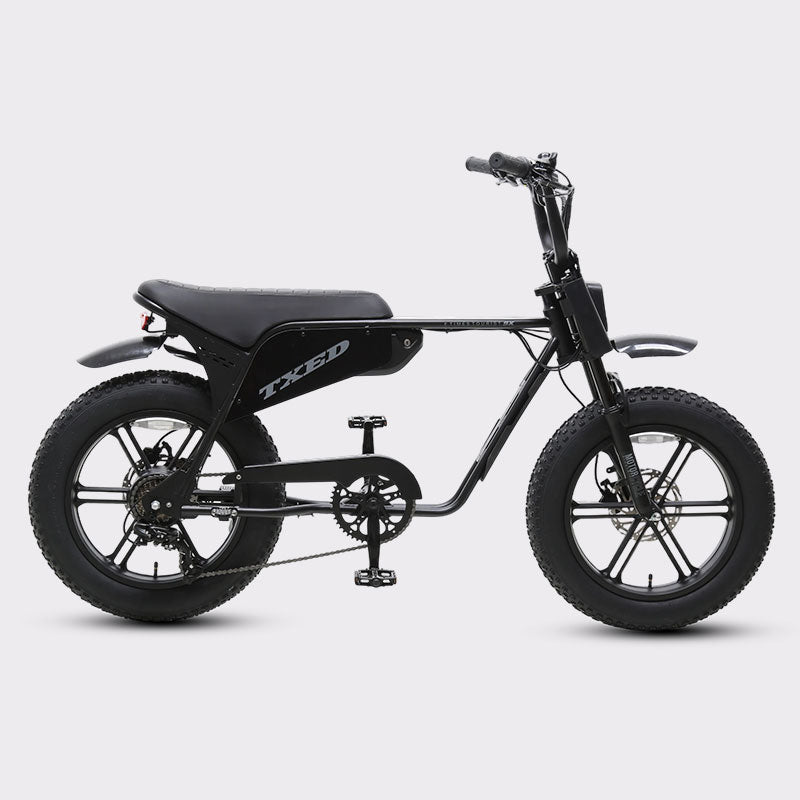
Read width separately from wheel diameter
In a tyre label such as 20 × 4 inches, the first number describes the wheel format and the second the nominal tyre width. A 20-inch fat-tyre bicycle can therefore be a substantial complete bike. Use the overall bicycle dimensions when planning where it will go.
For a concrete pair of formats, the TXED Maverick uses 20 × 4-inch tyres, while the Trail uses 27.5 × 2.3-inch tyres. These bikes also differ in frame layout, battery, brakes and weight, so any riding difference between them cannot be attributed to tyre width alone.
Understand the role of tyre pressure
Tyre manufacturer Schwalbe explains that wider tyres can generally operate at lower pressures, and that pressure affects shock absorption, grip and rolling resistance. The correct setting depends on the tyre, load and permitted pressure range. This explains a design trade-off; it does not provide a pressure setting for either TXED model.
Use the actual tyre and rim requirements and the bicycle manufacturer's instructions. A generic fat-tyre pressure from another model is a poor basis for setup. Tread, casing and surface conditions also matter, so width alone cannot promise better grip everywhere or a particular reduction in effort.
Choose the whole bike for the route
For roads and mixed leisure routes, compare the riding position, steering feel and equipment during an appropriate trial. For loose or rough routes, use a bicycle expressly intended for that riding and follow the access rules. A wide tyre does not establish suitability for every mountain-bike trail, jump or drop.
The Maverick combines its wide tyre format with a non-folding steel frame, hydraulic disc brakes and a 720Wh nominal battery. The Trail uses a conventional mountain-bike layout, mechanical discs and 468Wh. Choose the combination you will use rather than treating either tyre label as a performance ranking.
Allow for the ownership differences
Measure the storage route and confirm the wheel and tyre sizes accepted by any transport rack or wheel channel. If a car carrier is involved, its per-bike and total weight limits apply as well. The Maverick's published complete-bike weight is approximately 40.4kg; the Trail's is 24kg.
Record the full tyre size for replacement tyres and tubes, and establish local service availability for that size. Keep a gauge-equipped pump appropriate for the valve and pressure requirements. These practical details can be more useful than a broad claim that one format is always easier to own.
For the wide-tyre choice, view the current TXED fat-tyre range. To compare the two complete configurations, use the Maverick and Trail guide.