
Buying guides
ENGWE EP-2 Boost vs TXED Maverick
The ENGWE EP-2 Boost and TXED Maverick both list 20 × 4-inch tyres, but their frames and ownership requirements differ. The EP-2 Boost folds and has the lower published weight and price in this comparison. The Maverick has a fixed steel frame, a larger nominal battery and hydraulic disc brakes.
This TXED-edited comparison uses the linked UK product specifications checked on 14 September 2026. We manufacture and sell the Maverick. We have not conducted a head-to-head ride test.
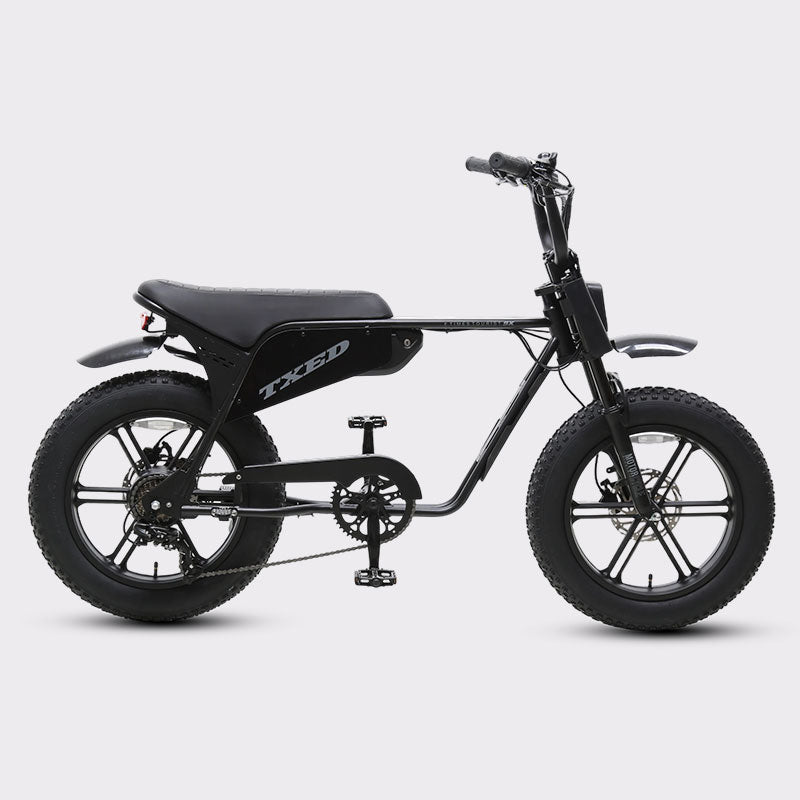
The comparable specification
| Field | ENGWE EP-2 Boost | TXED Maverick |
|---|---|---|
| Listed price | £899 | £999 including VAT |
| Frame format | Folding | Non-folding steel |
| Tyres | 20 × 4 inches | 20 × 4 inches |
| Published weight | 30kg | Approximately 40.4kg |
| Nominal battery | 624Wh | 720Wh |
| Brakes | Mechanical disc, 180mm | Hydraulic disc, 180mm |
| Advertised motor rating | 250W | 250W |
Sources: ENGWE EP-2 Boost and TXED Maverick. Confirm the selected option and total for your delivery address when ordering. These EP-2 Boost details should not be substituted for another EP-2 version.
Folding is the first meaningful split
If your home, lift or car requires a folded bicycle, investigate the EP-2 Boost first. Ask for its complete folded dimensions and consider how you will lift and secure the folded bike. A folding joint creates another storage option, but 30kg still needs a workable handling plan.
The Maverick remains a complete non-folding bicycle in storage. Allow for its whole length and width along the access route. The 20-inch wheel format does not mean the entire bike is small, and its higher published weight is relevant to steps and vehicle racks.
Compare battery energy without turning it into mileage
The Maverick's 48V 15Ah rating gives 720Wh nominal, compared with the EP-2 Boost's listed 624Wh. That is 96Wh more nominal capacity. It is a specification difference, not a measured distance advantage: load, assistance, terrain and conditions affect the distance each bike can travel.
Plan the same return journey for both options and compare how each battery is charged and stored. Keep reserve capacity for the journey you expect, rather than treating either advertised maximum range as a daily target.
Compare equipment and the complete fit
The brake actuation differs: the EP-2 Boost uses mechanical disc brakes and the Maverick uses hydraulics. That gives you different servicing arrangements to consider; it does not establish a tested stopping-distance winner.
Try the reach, seating position and controls where a demonstration is available. For the Maverick, a long saddle alone does not approve carrying another person. Confirm the exact rider, load and accessory requirements for either proposed setup.
Choose the EP-2 Boost for further investigation if folding, the lower published weight or the lower listed purchase price drives the decision. Shortlist the Maverick if a fixed frame suits your storage and you value its stated battery and brake equipment. The adult buying guide helps you test either choice against the route you actually ride.